
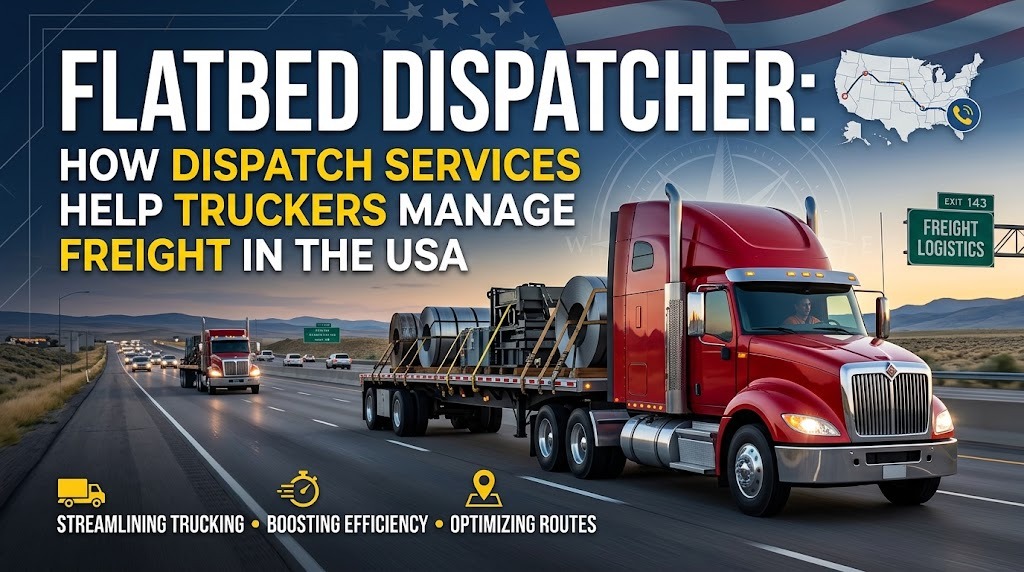
Flatbed Dispatcher: How Dispatch Services Help Truckers Manage Freight in the USA
A flatbed dispatcher helps trucking companies and independent owner-operators coordinate freight, communicate with brokers, negotiate rates, and organise deliveries. Flatbed transportation requires careful planning because shipments often involve construction materials, steel products, industrial equipment, lumber, and other cargo that needs specialised loading and securement. Effective dispatching helps carriers identify suitable loads while accounting for equipment requirements, operating costs, and delivery schedules.
Across the United States, flatbed carriers work with shippers in industries such as construction, manufacturing, agriculture, and energy. Their success depends on more than finding freight. Drivers must evaluate shipment dimensions, plan routes, arrange loading appointments, and ensure cargo is secured correctly. Dispatch support can help manage these responsibilities, particularly for owner-operators who handle their own business administration while spending long hours on the road.
Understanding how dispatching works can help carriers make better decisions about freight selection, scheduling, and the day-to-day management of their trucking operations.
What Does a Flatbed Dispatcher Do?
A flatbed dispatcher coordinates the movement of freight between carriers, brokers, and shippers. The specific responsibilities depend on the service agreement, but the work generally includes locating available loads, reviewing shipment details, discussing rates, arranging pickups, and communicating delivery updates.
Flatbed freight requires additional attention because not every shipment is suitable for every trailer. A carrier may operate a standard flatbed, step deck, or another specialised trailer, each designed for different types of cargo and loading requirements.
For example, a manufacturer may need to transport steel beams from a facility in Texas to a construction project in Oklahoma. Before recommending the shipment, the dispatcher needs to review the cargo’s dimensions, weight, pickup schedule, delivery location, and any special handling instructions.
The carrier must then confirm that the equipment can accommodate the freight and that the shipment can be transported legally and safely.
Dispatchers may also help organise rate confirmations, bills of lading, proof of delivery, and other administrative documents. Depending on the arrangement, they may communicate with brokers about delays or assist with payment follow-ups.
However, dispatchers do not replace the driver’s responsibility for vehicle operation, cargo securement, or compliance with transportation regulations. Their primary role is to coordinate information and help the carrier manage the commercial and logistical aspects of moving freight.
How Flatbed Dispatch Services Help Owner-Operators
Independent truckers often manage several responsibilities at once. They must drive safely, maintain their equipment, track expenses, communicate with brokers, and find their next shipment. Spending hours searching for loads can reduce the time available for other essential tasks.
Flatbed dispatch services can help organise these activities by handling agreed administrative and freight-coordination duties.
Load searching: Dispatchers review available freight through load boards, broker relationships, and other industry contacts. They look for shipments that match the carrier’s equipment, location, availability, and preferred routes.
Rate negotiation: A dispatcher may communicate with brokers to discuss compensation, pickup requirements, delivery schedules, and other shipment conditions. The carrier should understand and approve the final terms before committing to a load.
Scheduling: Pickup appointments, delivery windows, and route requirements need to be coordinated carefully. Clear communication helps reduce confusion and gives drivers a better understanding of their daily schedules.
Documentation: Dispatch support may include organising rate confirmations, checking shipment details, and helping maintain the paperwork required for transportation and invoicing.
Load tracking: Depending on the agreement, a dispatcher may provide shipment updates and communicate with brokers when delays affect the planned arrival time.
Consider an owner-operator delivering lumber to a construction supplier in Florida. After unloading, the driver needs another shipment that fits the trailer and allows enough time to reach the next pickup. A dispatcher can search for available freight near the delivery area while the driver handles unloading and vehicle inspections.
This approach can reduce administrative pressure, although it does not guarantee that a suitable return load will always be available. Freight demand changes by location, season, industry, and market conditions.
Finding Suitable Loads and Understanding Flatbed Rates
Selecting the right shipment is one of the most important parts of managing a flatbed trucking business. A high advertised rate may appear attractive, but the actual financial return depends on total mileage, operating expenses, waiting time, and the availability of future freight.
Flatbed dispatch requires evaluating several factors before a load is accepted.
- Loaded and empty miles: The carrier should account for the distance to the pickup location, the loaded journey, and any additional travel after delivery.
- Cargo specifications: Weight, dimensions, loading arrangements, and securement requirements must match the equipment.
- Pickup and delivery schedules: Strict appointments or long loading delays can affect the driver’s ability to complete other work.
- Operating expenses: Fuel, insurance, maintenance, tyres, tolls, and equipment payments influence profitability.
- Route conditions: Road restrictions, construction zones, weather, and other route considerations may affect travel time and costs.
For example, imagine a carrier receives an offer of $1,500 for a shipment involving 500 loaded miles. Reaching the pickup requires another 75 miles, bringing the total to 575 miles.
The gross rate across those total miles is approximately $2.61 per mile before expenses. This provides a more realistic starting point than calculating the rate using loaded miles alone.
The carrier must still account for fuel, maintenance, insurance, and other costs before determining whether the shipment is profitable.
Flatbed loads can also involve additional work, such as arranging tarps, securing irregular cargo, or waiting for loading equipment. These requirements should be clarified before accepting a shipment, particularly when they affect the rate or the time needed to complete the job.
A knowledgeable dispatcher helps present the relevant details so the carrier can make an informed decision.
Equipment, Cargo Securement, and Safety Requirements
Flatbed transportation involves cargo that may be exposed to weather and requires appropriate securement. Dispatch planning should therefore consider more than the pickup and delivery addresses.
Common flatbed shipments include lumber, steel coils, pipes, building materials, machinery, and industrial components. Each cargo type may have different weight distributions, dimensions, loading methods, and securement requirements.
A standard flatbed may suit many general freight shipments, while a step deck can accommodate certain taller loads. Other specialised equipment may be needed when cargo exceeds standard dimensions or requires a particular loading arrangement.
Before accepting a shipment, the carrier should verify the load’s weight and dimensions, confirm that the trailer is suitable, and determine whether additional securement equipment is required.
Chains, straps, edge protectors, tarps, and other materials must be selected according to the cargo and applicable requirements. Drivers should also inspect securement during the trip as required and respond appropriately if a load shifts or equipment becomes damaged.
Oversized or overweight shipments may require permits, route planning, escort vehicles, or other arrangements, depending on the cargo and applicable state regulations.
A dispatcher can help collect shipment information and coordinate communication, but the carrier and driver must verify that the transportation arrangements meet applicable legal and safety requirements.
Clear information at the booking stage can prevent avoidable problems at pickup. For instance, discovering that a shipment requires specialised securement after the truck arrives may lead to delays, additional expenses, or the need to decline the load.
Choosing a Flatbed Dispatch Service in the USA
Carriers have different needs depending on their experience, equipment, operating region, and business size. Some owner-operators prefer to manage their own freight searches, while others use dispatcher services to reduce administrative work.
Before entering an agreement, carriers should understand exactly what the provider will handle. One service may focus primarily on load searching and broker communication, while another may also assist with scheduling, documentation, and payment follow-ups.
Several questions can help clarify whether a dispatch arrangement fits the business:
- How are dispatch fees calculated?
- Which tasks are included in the service?
- Who reviews and approves load rates?
- How are cancellations and unexpected delays handled?
- Is the agreement exclusive, and how can either party end it?
- How will shipment records and business information be managed?
Carriers should also confirm who is authorised to communicate with brokers and accept shipment terms. Contracts should clearly explain the responsibilities of both parties and any limitations on the dispatcher’s authority.
EverMark Dispatchers operates in the US trucking dispatch market, where carriers may compare providers based on their service scope, communication practices, and contractual arrangements. As with any dispatch provider, the practical value of the relationship should be evaluated through clear terms and measurable business outcomes rather than promises of guaranteed loads or earnings.
Reviewing dispatch fees alongside revenue, operating costs, time saved, and freight suitability can help owner-operators determine whether the arrangement supports their business objectives.
Improving Freight Planning and Day-to-Day Operations
Consistent planning helps flatbed carriers manage their schedules and make better use of their equipment. Dispatching is most effective when accurate information is available before a shipment is accepted.
Carriers should maintain current details about trailer dimensions, available capacity, insurance, operating areas, and preferred freight categories. This information allows dispatchers to identify relevant opportunities more efficiently.
Keeping records of completed shipments is equally important. Tracking revenue per total mile, deadhead mileage, fuel expenses, waiting time, and maintenance costs can reveal which routes and freight types perform best.
Communication should remain clear throughout the shipment. Drivers need accurate pickup instructions, brokers need reliable status updates, and receiving facilities need realistic arrival estimates. When plans change, sharing the information promptly helps all parties respond appropriately.
Carriers should also allow time for inspections, rest breaks, maintenance, and unexpected delays. A schedule that appears profitable on paper may become impractical if it leaves insufficient time to complete the work safely.
Conclusion
A flatbed dispatcher helps trucking businesses coordinate freight, communicate with brokers, evaluate load opportunities, and manage transportation paperwork. Effective flatbed dispatch services consider cargo requirements, total mileage, operating expenses, scheduling, and safety rather than focusing only on finding the next shipment.
For US owner-operators, the right dispatch arrangement depends on the equipment they operate, the freight they handle, and the responsibilities they want to manage independently. Clear agreements, accurate shipment information, sound financial planning, and regulatory compliance remain essential to running a reliable flatbed trucking business.