
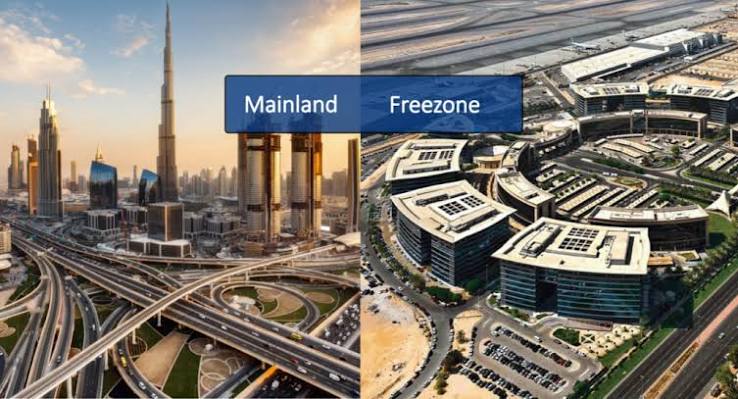
Mainland vs Free Zone in Dubai: Which One Is Right for You?
Quick answer: Choosing between a mainland company and a free zone entity in Dubai depends on your target market, ownership preferences, and business activities. Mainland companies can trade freely across the UAE, while free zone entities offer 100% foreign ownership and tax benefits but come with trading restrictions.
Starting a business in Dubai is an exciting move. The city offers a strong economy, a strategic location between East and West, and one of the most business-friendly environments in the world. But before you register your company, you need to make one of the most important decisions in the process: should you set up on the mainland or in a free zone?
Both options have real advantages, and the right choice depends on your specific goals. This guide breaks down the key differences in plain terms so you can move forward with confidence.
What Does Business Setup in Dubai Actually Look Like?
Business setup in Dubai falls under two main categories: mainland and free zone. There is also an offshore option, but that is a different structure used mainly for holding companies and international trade, not for businesses that operate physically in the UAE.
Mainland companies are licensed by the Department of Economic Development (DED) in their respective emirate. They can operate anywhere in the UAE, trade directly with the local market, and bid on government contracts. Historically, mainland companies required a local UAE sponsor holding 51% of the shares, but reforms introduced through UAE Federal Law No. 32 of 2021 now allow 100% foreign ownership in many business activities.
Free zone companies are registered within designated economic zones, each with its own regulatory authority. There are over 40 free zones across the UAE, including popular options like DMCC, DIFC, Dubai South, and JAFZA. Free zones offer 100% foreign ownership, zero corporate and personal income tax (within the zone), and simplified setup procedures.
Key Differences Between Mainland and Free Zone
Understanding the structural differences helps you align your choice with your actual business needs.
Can You Trade Directly in the UAE Local Market?
This is one of the biggest distinguishing factors. Mainland companies can sell goods and services directly to customers anywhere in the UAE without restriction. Free zone companies, on the other hand, cannot trade directly with the UAE mainland market. To do so, they must either appoint a local distributor or set up a mainland branch, which adds cost and complexity.
If your primary customers are UAE-based businesses or consumers, a mainland license is generally the better fit.
Who Owns the Company?
Free zones have always allowed 100% foreign ownership, which was a major draw for international entrepreneurs. The UAE’s recent legal reforms have leveled the playing field somewhat by extending full ownership rights to mainland companies in many sectors. However, some regulated industries such as legal services, accounting, and media still require a local partner on the mainland.
What Are the Cost Differences?
Free zones often market themselves as the more affordable option, and for some setups, that is true. Packages can include office space, visa allocations, and licensing in one bundled cost. However, costs vary significantly between zones, and hidden fees can add up.
Mainland setup costs tend to be higher initially, particularly for office space requirements, but the trade-off is broader market access. Long-term, a mainland company can generate more revenue by serving the local market directly.
How Many Visas Can You Get?
Both structures allow you to sponsor employee visas, but the number depends on your office size and the specific free zone or mainland authority. Mainland companies linked to larger physical offices generally have more flexibility to scale their visa allocations.
How to Decide: Helpful Tips
Here are some practical factors to weigh before making your decision.
Tip 1: Know your target market. If you plan to serve UAE residents and local businesses regularly, go mainland. If your focus is international trade or providing services to other free zone companies, a free zone may work well.
Tip 2: Consider your industry. Some activities are only permitted in specific free zones. DIFC, for example, is the hub for financial services and fintech. DMCC is popular for commodities trading. If your industry has a natural home, it simplifies the decision.
Tip 3: Think about your long-term growth. A free zone company can expand to the mainland later by setting up a branch, but that means additional licensing fees and administrative work. If you know from the start that you want mainland access, it may save money to start there.
Tip 4: Check visa and staffing needs. If you are hiring a large local team, compare visa costs and caps across both options before committing.
Tip 5: Work with the best business setup consultants in Dubai. Regulations around company formation in the UAE change frequently. The best business setup consultants in Dubai stay current with the latest licensing requirements, free zone packages, and ownership rules, helping you avoid costly mistakes and delays.
Which Business Structure Suits Different Scenarios?
- Choose mainland if you want to open a retail shop, restaurant, or service-based business targeting UAE residents.
- Choose a free zone if you are building a digital business, consulting firm, or trading company focused on international markets.
- Choose a free zone if you want a straightforward, fully foreign-owned structure with minimal local regulatory complexity.
- Choose mainland if you plan to bid on UAE government contracts or work with government entities.
Frequently Asked Questions
Can a free zone company work with mainland clients?
Yes, but with limitations. Free zone companies can provide services to mainland clients, but they cannot directly sell goods to the local market without going through a mainland distributor or setting up a mainland branch.
Is 100% foreign ownership available on the mainland?
Yes, for many business activities. UAE Federal Law No. 32 of 2021 expanded foreign ownership rights significantly. However, some restricted sectors still require a local UAE national as a partner. A business setup consultant can confirm whether your specific activity qualifies.
Which option is cheaper to set up?
It depends on the free zone and the activity. Some free zones offer affordable startup packages, but mainland costs vary by emirate and office requirements. Always request a full cost breakdown before deciding.
How long does it take to register a company in Dubai?
Free zone company formation can take as little as 3 to 7 business days if documents are in order. Mainland registration through the DED typically takes 1 to 3 weeks, depending on the activity and any external approvals needed.
Do free zone companies pay corporate tax in the UAE?
The UAE introduced a 9% federal corporate tax in June 2023. Free zone companies that meet qualifying criteria can still benefit from a 0% tax rate on qualifying income. Non-qualifying income is taxed at 9%. Consulting a tax advisor is recommended to understand how this applies to your business.
Final Words
The choice between a mainland company and a free zone entity is not about which option is universally better. It is about which structure fits your business model, your target customers, and your growth plans.
Take the time to map out your business activities, where your revenue will come from, and how you plan to scale. Then consult professionals who specialize in UAE company formation to guide you through the details. Getting this decision right from the start saves you time, money, and headaches down the road.