
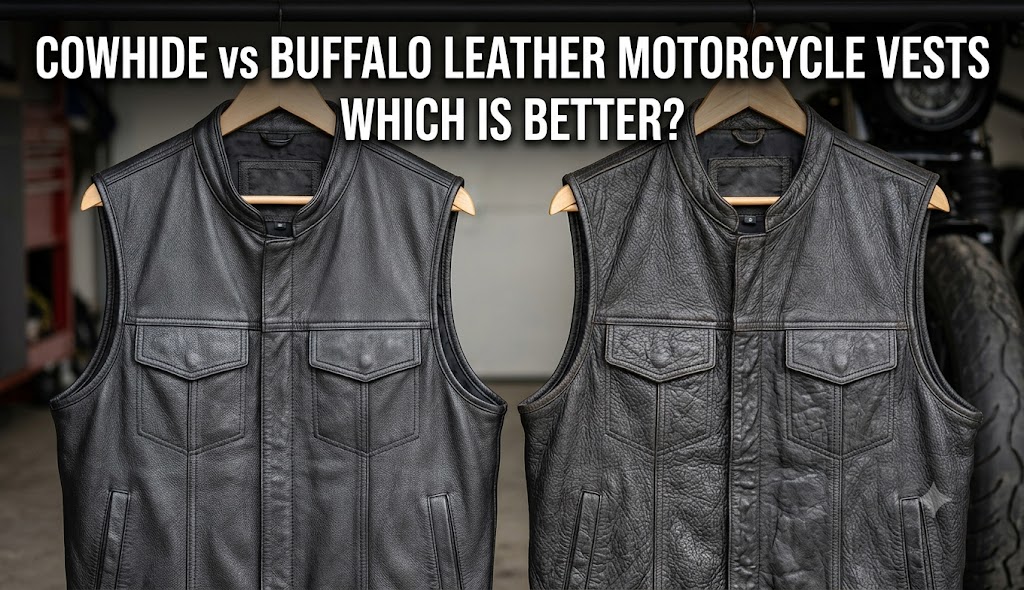
Cowhide vs Buffalo Leather Motorcycle Vests: Which Is Better?
When you’re shopping for leather motorcycle vests, the salesperson will probably ask: cowhide or buffalo? If you’re like most riders the first time they hear this question, you’ll just stare back blankly.
Both are real leather. Both protect you on the road. But they feel different, age differently, and work better for different riders. Here’s what actually separates them and which one deserves your money.
Understanding the Leather: Where It Comes From
Cowhide Basics
Cowhide is exactly what it sounds like, leather from cattle raised primarily for beef. It’s the most common leather in motorcycle gear because there’s a massive supply. Cattle farming is everywhere, so tanneries have steady access to hides.
The grain structure in cowhide is tighter and more uniform. Cows live calmer lives than buffalo, so their hides show fewer scars and imperfections. This makes cowhide easier to work with and finish consistently.
Buffalo Leather Origins
Buffalo leather (usually water buffalo, not American bison) comes from animals with thicker, tougher hides. Buffaloes work in fields, deal with rougher conditions, and develop naturally thicker skin as a result.
The grain is coarser, the leather is denser, and you’ll see more natural character marks. These aren’t flaws, they’re proof you’re getting the real thing.
Cowhide Vests: The Standard Choice
Weight and Feel
Cowhide real leather motorcycle vests for men typically weigh between 2.5-4 pounds depending on thickness. The leather is firm but breaks in relatively quickly. After a season of wear, a cowhide vest molds to your body and feels like a second skin.
Most cowhide vests use 1.2 mm to 1.4 mm thickness. That’s the sweet spot between protection and comfort. Go thinner, and you’re wearing a fashion piece. Go thicker, and you’re wearing armor that never really breaks in.
Durability and Protection
Cowhide holds up to abrasion well. In a slide, quality cowhide will take the hit and show scuff marks, but it rarely tears through. I’ve seen 10-year-old cowhide vests still protecting riders after multiple get-offs.
The stitching usually fails before the leather does, which tells you something about cowhide’s strength.
How It Ages
Cowhide develops character slowly. It darkens in high-wear areas, gets softer with time, and develops a natural sheen from body oils and handling. A well-maintained cowhide vest looks better at five years old than it did new.
Scratches tend to blend in with proper leather conditioning. The leather responds well to treatment and stays supple if you take care of it.
Buffalo Leather Vests: The Heavy Duty Option
Weight and Thickness
Buffalo leather is noticeably heavier. A comparable vest might weigh 4-6 pounds, sometimes more. The leather is naturally thicker, often 1.5mm to 2.0mm even in garment-weight applications.
When you first put on a buffalo leather vest, it feels stiff. Almost rigid. This isn’t a defect—it’s the nature of the hide. Breaking in a buffal takes longer, but once it molds to you, it stays that way.
Superior Toughness
Buffalo leather is tougher than cowhide, period. The fiber structure is denser. In abrasion tests, buffalo consistently outlasts cowhide. If maximum protection is your goal, buffalo wins.
The trade-off is flexibility. Buffalo doesn’t move with you as naturally as cowhide, especially in the first year of ownership.
Aging Characteristics
Buffalo develops a rugged patina that looks distinctly different from cowhide. The natural grain markings become more pronounced. The leather takes on an almost distressed look that fans of vintage leather motorcycle vest styles absolutely love.
Scratches don’t disappear on buffalo, they become part of the vest’s story. Some riders hate this. Others consider it the best part.
Which Leather Works for Your Riding Style
Choose Cowhide If:
- You ride regularly and want something comfortable for long sessions
- You’re buying your first quality vest
- You prefer gear that looks polished and refined
- You want faster break-in time
- Budget is a consideration
- You’ll wear the vest over jackets sometimes and need flexibility
Choose Buffalo If:
- Maximum protection is your top priority.
- You ride a cruiser or touring bike (an upright position handles the weight better).
- You love the rugged, worn-in look
- You’re willing to invest time in breaking it in properly.
- You want a vest that will last 20+ years.
- You appreciate heavier, more substantial gear
Considerations for Bigger Riders
If you’re shopping for a big and tall leather motorcycle vest, the leather type affects fit and comfort differently.
Cowhide for Big and Tall
Cowhide’s flexibility helps when you’re working with larger panels of leather. The vest moves with you better, which matters when you need more material to cover your frame. Cowhide also breaks in faster, so you’re not fighting stiff leather for months.
Buffalo for Big and Tall
Buffalo’s extra thickness means a big and tall leather motorcycle vest for men in buffalo will be noticeably heavier. If you’re already carrying a bigger frame, adding 5-6 pounds of stiff leather can get tiring on long rides.
That said, buffalo’s durability means the vest holds its shape better over time. Larger vests sometimes develop stress points where leather stretches, buffalo resists this better than cowhide.
The Vintage Vest Factor
Hunters of vintage leather motorcycle vest pieces need to know their leathers.
Vintage Cowhide
Cowhide vests from the 70s and 80s used thicker leather than modern versions. If you find a vintage cowhide vest in good condition, it’s probably 1.4-1.6mm thick with beautiful patina development. These are worth money because that quality isn’t common in new cowhide vests at similar price points.
Vintage Buffalo
Old buffalo vests are tanks. They’ve survived decades because buffalo leather is nearly indestructible. The challenge is that vintage buffalo often feels like cardboard until you recondition it heavily. Budget time and leather treatment products if you’re going this route.
Price Reality Check
Quality cowhide leather motorcycle vests run $150-$350 depending on features, brand, and construction.
Buffalo vests in the same style typically cost $200-$450. You’re paying for rarer material and the extra tanning work buffalo requires.
Both are investments that last years. Cheap vests under $100 are usually split leather or thin garment leather that won’t protect you properly. Don’t go there.
The Bottom Line
Neither leather is better; they serve different needs.
Cowhide gives you the best balance of protection, comfort, and value. It’s what most riders should buy, especially for a first-quality vest.
Buffalo is for riders who prioritize maximum durability and don’t mind the extra weight and break-in time. It’s also perfect if you’re after that heavy-duty, vintage aesthetic.
Your riding style, body type, and how you want your vest to age over the years should drive your choice. Both leathers will protect you. Both will last if you maintain them. Pick the one that fits your riding life.