
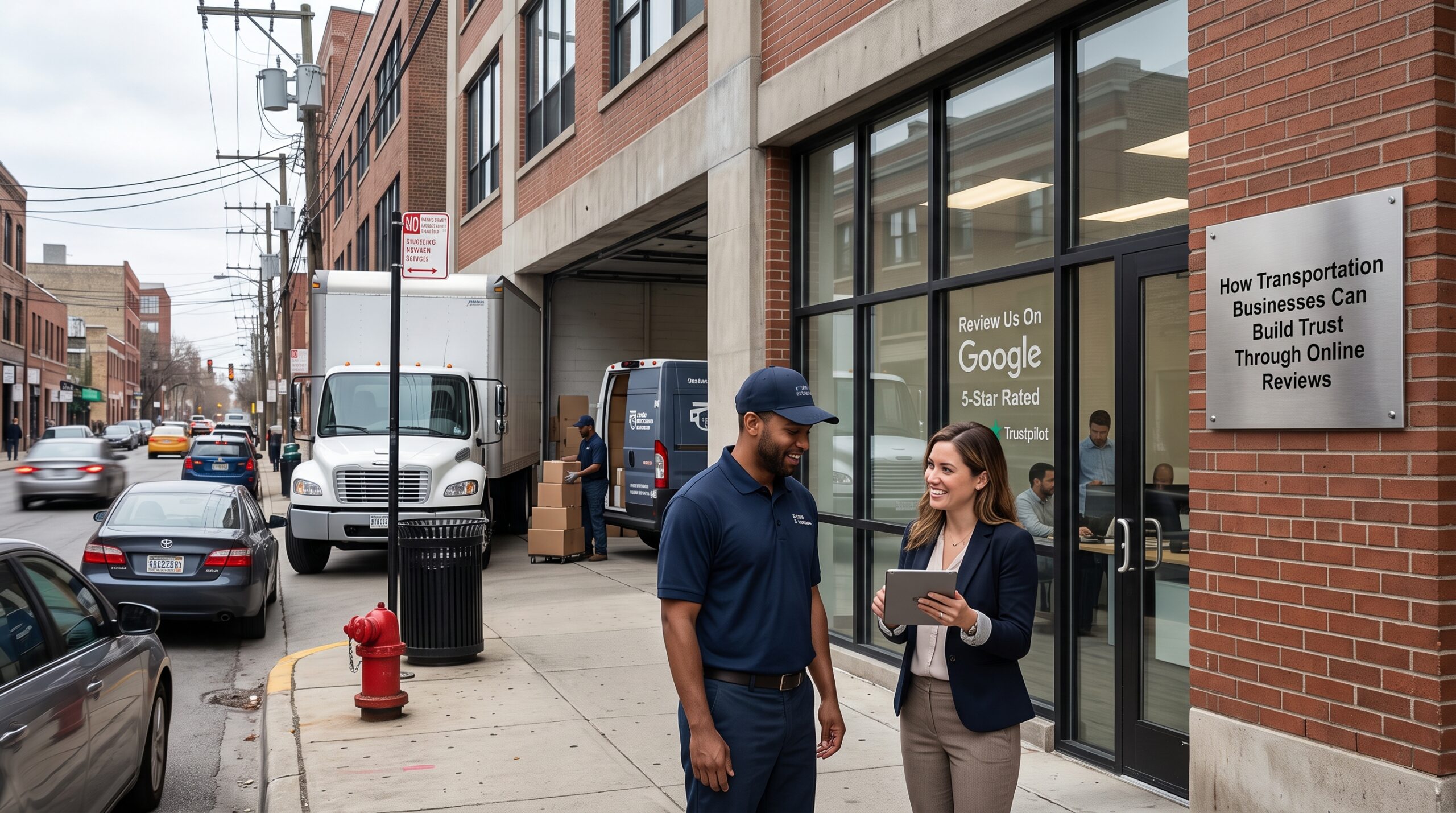
How Transportation Businesses Can Build Trust Through Online Reviews
Trust plays a major role in the transportation industry. Whether customers need a moving company, freight carrier, airport transfer, logistics provider, or local transportation service, they want to know their belongings, deliveries, or journeys are in reliable hands.
Unlike many other services, transportation often involves tight schedules, valuable property, safety concerns, and direct communication. Customers cannot always judge a company’s reliability before booking. Instead, they look for evidence that other people have had positive experiences.
Online reviews provide that evidence. They help transportation businesses demonstrate reliability, communicate service quality, and establish credibility with potential customers.
However, collecting reviews is only one part of building a trustworthy online reputation. Businesses must also manage feedback, respond professionally, maintain accurate information, and consistently deliver the experience customers expect.
This guide explains how transportation businesses can use online reviews to strengthen customer confidence, improve their reputation, and encourage more inquiries and bookings.
Why Trust Matters in the Transportation Industry
Transportation services require customers to place considerable responsibility in another company’s hands.
A family hiring movers expects its furniture and personal belongings to arrive safely. A business using freight transportation depends on timely deliveries to keep operations running. A traveler booking an airport transfer wants assurance that the driver will arrive on time.
In each situation, customers are purchasing more than transportation. They are paying for reliability, professionalism, communication, and peace of mind.
Customers Want to Reduce Risk
Hiring an unfamiliar transportation company can feel risky.
Customers may worry about:
- Delayed pickups or deliveries.
- Unexpected charges after booking.
- Damaged or missing belongings.
- Poor communication with drivers or support teams.
- Unprofessional employees.
- Cancellations or last-minute scheduling problems.
- Difficulty resolving complaints.
These concerns often influence which businesses customers contact.
A transportation company with a visible history of detailed customer feedback gives potential clients more information to evaluate before making a decision.
Trust Influences Booking Decisions
Customers frequently compare several transportation providers before choosing one.
Price matters, but the cheapest option is not always the most appealing.
A company with consistent positive feedback about punctuality, careful handling, and professional communication may appear more dependable than a competitor with limited information.
Reviews help customers understand what they might experience after making a reservation.
For transportation businesses, that confidence can influence whether someone requests a quote, makes a phone call, or completes a booking.
How Online Reviews Influence Customer Perception
Online reviews act as a public record of customer experiences.
They allow potential customers to learn about a business from people who have already used its services.
A transportation company may advertise reliable deliveries and professional drivers, but customer feedback provides another perspective on those claims.
Reviews Provide Social Proof
Social proof refers to the influence that other people’s experiences can have on individual decisions.
When customers see that others have successfully used a transportation service, they may feel more comfortable considering the same provider.
For example, a moving company with detailed reviews describing careful packing, timely arrival, and courteous staff provides useful reassurance to homeowners planning a relocation.
Similarly, a logistics provider with feedback about consistent delivery performance can demonstrate qualities that business customers value.
The strongest social proof comes from authentic, specific, and relevant experiences rather than generic praise.
Reviews Help Customers Compare Providers
Customers rarely evaluate transportation businesses in isolation.
They may compare multiple companies based on:
- Overall ratings.
- Number of customer reviews.
- Recent feedback.
- Comments about service reliability.
- Communication and responsiveness.
- Pricing transparency.
- Complaint handling.
- Experiences involving similar transportation needs.
A business that maintains an informative review profile makes this comparison easier.
Detailed reviews can also distinguish a company from competitors offering similar services.
Recent Feedback Shows Current Performance
Older reviews can establish a company’s history, but recent feedback provides insight into its present operations.
Transportation companies may change vehicles, hire new drivers, expand routes, or introduce additional services.
Recent customer experiences can help potential clients assess how the business is performing today.
For this reason, businesses should encourage a steady flow of genuine feedback rather than collecting reviews only during occasional marketing campaigns.
Which Review Platforms Matter for Transportation Businesses?
Transportation companies can benefit from maintaining a presence across several relevant review platforms.
The most useful platforms depend on the business model, service area, and target audience.
Google Reviews
Google Reviews are particularly valuable for transportation businesses that depend on local searches.
Customers searching for movers, taxi services, vehicle transportation, or delivery providers may encounter Google Business Profiles during their research.
A complete profile can display business information alongside customer ratings and feedback.
Transportation companies should keep their business details accurate, respond to reviews, and encourage customers to share genuine experiences.
Facebook Reviews and Recommendations
Facebook can also play an important role in transportation marketing.
Customers may discover businesses through local community groups, recommendations from friends, company pages, and shared posts.
A well-maintained Facebook business page can provide service information, customer feedback, contact options, and business updates in one place.
For transportation companies evaluating their reputation-building options, resources covering Facebook business page reviews can help them understand review-related services and how customer feedback fits into their wider Facebook presence.
Any review-building strategy should prioritize genuine customer experiences and comply with Facebook’s applicable policies. Purchased or incentivized feedback that misrepresents actual experiences can damage credibility rather than strengthen it.
Industry-Specific Review Platforms
Some transportation businesses benefit from specialized directories and review websites.
Moving companies, freight carriers, vehicle shippers, and logistics providers may be listed on platforms designed for their industries.
These platforms can attract customers who are already researching transportation services.
Businesses should claim legitimate profiles where available, maintain accurate information, and monitor customer feedback.
A consistent reputation across relevant platforms helps potential customers evaluate a company from multiple sources.
How Transportation Businesses Can Earn More Positive Reviews
Building a strong review profile begins with delivering a positive customer experience.
Marketing can encourage customers to share their experiences, but it cannot replace reliable service.
Deliver the Service as Promised
Transportation businesses should establish clear expectations before accepting a booking.
Customers need accurate information about:
- Pickup and delivery schedules.
- Service availability.
- Estimated transportation costs.
- Additional fees.
- Insurance or liability coverage.
- Cancellation policies.
- Special handling requirements.
Meeting these expectations gives customers a genuine reason to leave favorable feedback.
If unexpected problems occur, businesses should communicate promptly and explain the available solutions.
Ask Customers for Feedback at the Right Time
Timing can influence whether customers respond to a review request.
A transportation business should generally request feedback after completing the service, when the experience is still fresh.
For example:
- Moving companies can follow up after delivery and unloading.
- Airport transfer providers can request feedback after the journey.
- Vehicle transporters can contact customers after vehicle delivery.
- Logistics providers can seek feedback after completing a shipment.
- Local transportation companies can follow up after a completed booking.
The request should be polite, brief, and easy to understand.
Customers should be invited to share honest feedback, whether their experience was positive, neutral, or negative.
Make the Review Process Convenient
Customers are more likely to consider leaving feedback when the process is straightforward.
Businesses can provide a direct link to their legitimate review page through an appropriate follow-up channel.
For example, a transportation company might send a short message thanking the customer and inviting them to describe their experience.
The message should avoid pressuring customers or requesting a particular rating.
Businesses should also avoid offering rewards in exchange for positive reviews or using methods that violate platform policies.
Train Employees to Encourage Honest Feedback
Drivers, dispatchers, movers, and customer support representatives all influence the customer experience.
Employees should understand the importance of professional communication and reliable service.
When appropriate, staff can inform customers that the company welcomes feedback.
However, review requests should never become aggressive sales pitches.
The goal is to make customers aware of the opportunity to share their experiences, not to influence what they write.
Follow Up After Resolving Problems
Not every transportation experience goes according to plan.
Traffic delays, weather conditions, vehicle problems, and scheduling complications can affect operations.
What matters is how the company handles these situations.
After resolving a problem, a business can follow up to confirm that the customer is satisfied with the outcome.
This demonstrates accountability and creates another opportunity to receive useful feedback.
Customers should remain free to describe their complete experience honestly.
Why Responding to Reviews Builds Customer Confidence
Collecting reviews without responding to them means missing an important opportunity.
Public responses show potential customers how a transportation business communicates with people who have used its services.
A thoughtful response can reinforce professionalism and demonstrate that feedback is taken seriously.
Responding to Positive Reviews
When customers leave positive feedback, businesses should acknowledge their experience.
A useful response can:
- Thank the customer.
- Reference the service provided.
- Recognize specific feedback.
- Express appreciation for their support.
For example, a moving company could thank a customer for recognizing the team’s punctuality and careful handling.
Responses should feel personal rather than copied from the same template.
Responding to Negative Reviews
Negative feedback requires a more careful approach.
A transportation company should avoid arguing with customers publicly, dismissing complaints, or revealing private booking information.
Instead, the response should acknowledge the concern and offer an appropriate way to investigate or resolve the issue.
A professional approach generally includes:
- Thanking the customer for sharing feedback.
- Acknowledging the reported concern.
- Explaining that the business takes the matter seriously.
- Offering a suitable contact channel for further discussion.
- Following through on any promised action.
When a company makes a genuine mistake, accepting responsibility can demonstrate professionalism.
Potential customers often evaluate how a business handles criticism, not just how many positive reviews it receives.
Avoiding Generic Responses
Repeated responses such as “Thanks for your review” may appear impersonal.
Transportation businesses can improve their replies by referencing relevant details without exposing personal information.
A response mentioning the customer’s relocation, delivery, or transportation experience can feel more attentive.
However, companies should never publish private addresses, shipment details, phone numbers, or other sensitive information.
How Review Management Supports Transportation Marketing
Online reviews are most effective when they are part of a broader marketing strategy.
A company may have excellent feedback but still struggle to attract customers if its website, business listings, and social media profiles are poorly maintained.
Review management should therefore work alongside search visibility, brand communication, and customer service.
Building a Consistent Online Reputation
Customers may encounter a transportation company through Google, Facebook, its website, or an industry directory.
If these channels contain conflicting information, potential clients may become uncertain.
Businesses should maintain consistency across their online presence.
Important details include:
- Business name.
- Contact information.
- Service areas.
- Operating hours.
- Available transportation services.
- Branding and company descriptions.
Consistent information supports a professional image and helps customers recognize the same business across different platforms.
Using Review Management Services
Managing feedback across multiple platforms can become time-consuming, particularly for transportation companies operating in several locations.
Businesses may explore specialized services to better understand their online reputation and available review-related marketing options.
Online Boost is a platform offering buy-review services and other digital marketing solutions. Transportation businesses considering such services should evaluate them carefully, particularly how reviews are obtained, whether they reflect genuine customer experiences, and whether the methods comply with platform policies.
For long-term credibility, authentic customer feedback remains the strongest foundation of an effective reputation strategy.
Connecting Reviews With Other Marketing Channels
Transportation companies can use legitimate customer feedback to strengthen their marketing materials.
For example, with appropriate permission, businesses may feature authentic testimonials on their websites, social media pages, and promotional materials.
A logistics provider could highlight a customer’s experience with dependable communication.
A moving company could share feedback about careful handling and punctual service.
An airport transportation provider might feature a testimonial discussing cleanliness and on-time pickup.
These examples help potential customers understand what the company does well.
Businesses should preserve the original meaning of customer feedback and avoid presenting testimonials in a misleading way.
How Different Transportation Businesses Can Benefit From Reviews
Not every transportation company serves the same audience.
Review strategies should reflect the services offered and the concerns customers are most likely to have.
Moving Companies
Moving customers often worry about property damage, hidden charges, and scheduling reliability.
Reviews describing careful packing, professional crews, and transparent communication can address these concerns.
Moving companies should encourage customers to describe their actual relocation experiences.
Freight and Logistics Providers
Business customers frequently prioritize delivery consistency, shipment visibility, and communication.
Detailed feedback about reliable operations can help logistics providers demonstrate their service standards.
However, reviews should complement measurable performance information, such as delivery records and documented service commitments.
Taxi and Airport Transfer Services
Passengers often focus on punctuality, driver professionalism, vehicle cleanliness, and personal safety.
Reviews addressing these areas can help customers evaluate transportation options.
Companies should also ensure that their booking information and service availability remain accurate.
Vehicle Transportation Companies
Customers shipping vehicles may be concerned about damage, pickup arrangements, delivery schedules, and insurance coverage.
Reviews that describe the shipping process can provide valuable context.
Vehicle transporters should also explain their responsibilities, documentation requirements, and claims procedures clearly.
Local Delivery Businesses
Local delivery services depend heavily on reliability and customer satisfaction.
Feedback about timely arrivals, careful handling, and helpful communication can support their reputation.
Businesses should monitor recurring complaints and use them to improve operations.
Common Review Management Mistakes Transportation Companies Should Avoid
Even established transportation businesses can weaken their online reputation through poor review management practices.
Ignoring Negative Feedback
Unanswered complaints can leave potential customers wondering whether the business takes problems seriously.
Companies should review feedback regularly and respond where appropriate.
Not every complaint requires a lengthy public explanation, but meaningful concerns deserve attention.
Focusing Only on Five-Star Ratings
A perfect rating should not become the sole objective.
Customers often want balanced, detailed information about a company’s service.
A profile containing authentic feedback and professional responses can be more informative than one filled with vague praise.
Businesses should focus on service quality and genuine customer satisfaction rather than attempting to manufacture a particular rating.
Using Misleading or Fabricated Reviews
Fake reviews can create serious reputation risks.
Misrepresenting customer experiences may violate review platform policies and applicable consumer protection laws.
Businesses should not publish invented testimonials, impersonate customers, or purchase reviews presented as independent experiences when they are not genuine.
Trust is difficult to build and easy to damage.
Responding Emotionally to Complaints
Transportation problems can involve stressful situations, especially when customers are dealing with delays, damaged belongings, or unexpected costs.
Defensive or aggressive responses can make an already difficult situation worse.
Businesses should investigate complaints carefully and respond professionally.
Failing to Learn From Customer Feedback
Reviews provide information about operational strengths and weaknesses.
If several customers mention late arrivals, poor communication, or unclear pricing, the business should investigate those patterns.
Simply responding to complaints without addressing recurring problems limits the value of review management.
Turning Customer Feedback Into Business Improvements
Online reviews should influence more than marketing.
They can also help transportation businesses identify opportunities to improve service quality.
Identify Repeated Complaints
A single negative review may describe an isolated incident.
However, several reviews mentioning the same problem can indicate a recurring operational issue.
For example, repeated complaints about delayed pickups may suggest a scheduling or dispatch problem.
Businesses should review these patterns and investigate the underlying causes.
Recognize What Customers Appreciate
Positive feedback can reveal which service qualities matter most to customers.
A transportation company may discover that clients repeatedly praise its communication, careful handling, or flexible scheduling.
These strengths can guide employee training and help the business explain its value more clearly.
Improve Internal Processes
Customer feedback can inform practical operational changes.
Examples include:
- Improving pickup confirmations.
- Providing clearer delivery updates.
- Revising booking instructions.
- Training drivers on customer communication.
- Clarifying additional charges.
- Strengthening complaint resolution procedures.
These improvements can produce better customer experiences and more meaningful feedback over time.
How to Measure the Success of an Online Review Strategy
Transportation businesses should evaluate whether their review management efforts are producing useful results.
The number of reviews collected is only one measure.
Other indicators can provide a more complete picture.
Review Volume and Frequency
Track how many genuine reviews the business receives over time.
Consistent review activity can indicate that customers are engaging with the feedback process.
However, volume should never come at the expense of authenticity.
Customer Sentiment
Look beyond star ratings.
Review comments may reveal positive or negative patterns involving punctuality, communication, service quality, and pricing.
Monitoring these themes helps businesses understand how customers perceive their services.
Response Rate and Quality
Businesses can assess how consistently they respond to feedback.
They should also consider whether responses are helpful, professional, and relevant.
A high response rate is less valuable if replies are generic or dismissive.
Inquiries and Booking Performance
Transportation companies can monitor website inquiries, calls, quote requests, and completed bookings alongside their reputation efforts.
Customer surveys may also help identify whether reviews influenced booking decisions.
However, businesses should avoid assuming that every increase in inquiries comes directly from reviews.
Pricing, seasonality, advertising, competition, and other factors can also affect performance.
Building a Long-Term Reputation Strategy
A strong online reputation is developed through consistent service and responsible communication.
Transportation businesses should treat review management as an ongoing responsibility rather than a one-time promotional activity.
An effective long-term approach includes delivering reliable service, requesting honest feedback, monitoring review platforms, responding professionally, and using customer comments to improve operations.
Companies should also make sure their online information reflects their current services.
As a transportation business expands into new locations or introduces additional offerings, its review strategy should evolve accordingly.
The objective is not simply to appear popular online. It is to create a trustworthy public record that accurately reflects how the company serves its customers.
Frequently Asked Questions
Why are online reviews important for transportation businesses?
Online reviews help potential customers evaluate a transportation company’s reliability, professionalism, communication, and service quality.
Because transportation often involves valuable property, important schedules, or personal safety, customers want reassurance before booking.
Authentic reviews provide information based on previous customer experiences.
How can transportation companies get more Google and Facebook reviews?
Transportation companies can request honest feedback after completing a service.
They can share direct review links through appropriate follow-up messages, make the process convenient, and remind customers that their opinions are valued.
Businesses should request feedback without pressuring customers to leave positive ratings or offering prohibited incentives.
Do online reviews help transportation companies attract customers?
Online reviews can influence how customers perceive and compare transportation providers.
Positive, detailed feedback may encourage potential customers to request quotes or contact a business.
However, reviews do not guarantee additional bookings. Pricing, availability, service quality, and competition also influence customer decisions.
Should transportation businesses respond to every review?
Responding to reviews is generally a good practice when it is practical and appropriate.
Positive reviews deserve appreciation, while negative reviews may require acknowledgment and investigation.
Responses should remain professional, relevant, and respectful of customer privacy.
Can negative reviews damage a transportation company’s reputation?
Negative reviews can influence customer perception, particularly when they describe serious or recurring problems.
However, a professional response and appropriate corrective action can demonstrate accountability.
Businesses should investigate legitimate complaints and use feedback to improve their services.
Which review platform is best for transportation businesses?
The best platform depends on the company’s services and target customers.
Google Reviews are useful for many local transportation businesses, while Facebook can support community engagement and customer discovery.
Industry-specific directories may also be valuable for moving companies, vehicle transporters, and freight providers.
How often should transportation companies request customer reviews?
Businesses can make review requests part of their normal post-service follow-up process.
The appropriate frequency depends on booking volume and customer relationships.
Requests should be relevant, respectful, and directed toward customers who have actually used the service.
Can transportation companies use customer reviews on their websites?
Yes, businesses can feature authentic customer testimonials on their websites when they have appropriate permission and comply with applicable requirements.
Testimonials should accurately represent the original experience.
Companies should avoid editing feedback in ways that change its meaning or create misleading impressions.
What should a transportation company do about a fake review?
The company should document the concern and use the review platform’s reporting process if the review appears to violate its policies.
It should avoid publicly sharing private customer information or making unsupported accusations.
If a response is necessary, the business can politely explain that it cannot identify the reported experience and invite the reviewer to contact its support team.
How long does it take to build a strong online reputation?
There is no fixed timeline.
Results depend on the company’s customer volume, service quality, existing reputation, and consistency in requesting and managing feedback.
A sustainable reputation strategy focuses on long-term customer satisfaction rather than rapid increases in ratings or review counts.
Can buying reviews create problems for transportation businesses?
Yes. Purchasing fabricated, misleading, or improperly incentivized reviews can violate platform policies and consumer protection requirements.
It can also undermine customer confidence if the reviews do not reflect real experiences.
Transportation businesses should prioritize authentic feedback and carefully evaluate any third-party review service before using it.
What information should customers look for in transportation reviews?
Customers should look for specific comments about punctuality, communication, pricing transparency, professional conduct, and the condition of transported belongings or vehicles.
Recent reviews involving similar transportation needs can be particularly useful.
Customers should also consider how the business responds when problems occur.
Conclusion
Online reviews have become an important part of how customers evaluate transportation businesses.
Whether someone is booking a moving company, arranging freight transportation, shipping a vehicle, or scheduling an airport transfer, trust often influences the final decision.
Authentic customer feedback can demonstrate service quality, reduce uncertainty, and help potential clients understand what to expect.
However, a trustworthy reputation requires more than positive ratings. Transportation businesses must deliver reliable service, communicate clearly, respond to concerns, and learn from customer experiences.
Companies that approach online reviews as a long-term customer relationship tool can build stronger credibility and create a more dependable foundation for future growth.
Business, Marketing, Internet, Internet Services, Online Services, Social Media, Social Networking, Marketing, Digital Marketing, SEO, Web Marketing, Online Marketing, Technology, Web Services, Business Services