
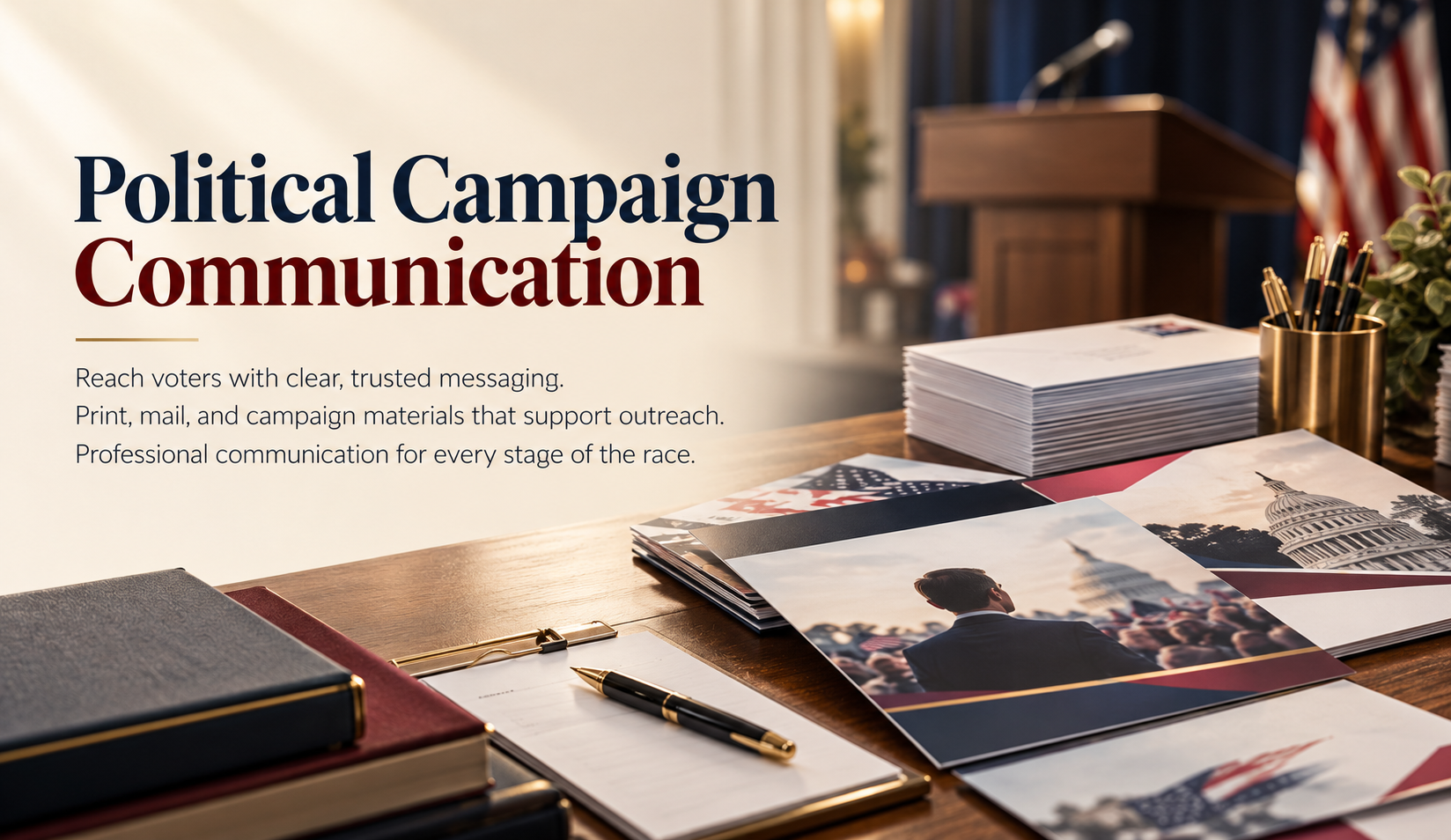
Traditional vs. Digital Marketing in Political Campaigns
Running a political campaign takes more than a clear message and a good budget. Campaign teams must make tough choices about where to spend money, how to manage deadlines, and which marketing channels deserve their attention. A poor decision can waste funds and leave little room to correct mistakes before Election Day.
One of the biggest questions involves traditional vs. digital marketing in political campaigns. Should a campaign invest in printed materials, direct mail, online advertising, or a combination of both? Each channel offers different benefits, costs, and practical challenges.
At MailProsUSA, we understand how printing schedules, mailing lists, production costs, and delivery planning shape a Political Campaign. We also know that digital tools bring their own demands, from ongoing content updates to performance tracking.
In this guide, we compare both approaches, explain their strengths and limits, and explore how campaign teams can build a more organized marketing plan.
What Is Traditional Marketing in Political Campaigns?
Traditional political marketing uses established communication channels such as direct mail, newspapers, television, radio, printed flyers, and outdoor advertising. These methods allow campaign teams to share information through physical materials and broadcast media.
Traditional marketing does not depend on social media accounts, search engines, or online advertising platforms. However, each channel has its own production process, audience reach, and cost structure.
For example, a printed postcard requires design, proofreading, printing, mailing preparation, and postal delivery. A radio advertisement needs a script, recording, and broadcasting schedule. Both require planning before the campaign launches.
Common Traditional Political Marketing Channels
Campaign teams often use several traditional channels to distribute information about candidates, events, and public issues.
- Political direct mail: Postcards, letters, and brochures that reach residential mailboxes.
- Newspaper advertising: Printed announcements and advertisements in local or regional publications.
- Television commercials: Video advertisements that appear during broadcast programming.
- Radio advertising: Audio messages through local and regional radio stations.
- Yard signs and banners: Printed materials that display candidate names and campaign information.
- Printed flyers: Handouts that provide event details, contact information, and issue summaries.
Each format serves a different communication need. A brochure can explain several topics, while a yard sign usually carries very little information.
Why Traditional Marketing Still Matters
Traditional channels remain useful because they offer ways to distribute information outside digital platforms. A household can receive a mailer without creating an online account or using a smartphone.
Printed materials also offer a physical format that readers can keep, share, or review later. This does not guarantee attention, but it creates a different experience from viewing a temporary online advertisement.
From a printing perspective, traditional marketing works best when teams allow enough time for design reviews, production, mailing preparation, and delivery. Rushed schedules can create avoidable expenses and quality problems.
What Is Digital Marketing in Political Campaigns?
Digital political marketing uses online channels to distribute campaign information, publish updates, and measure interactions. These channels include websites, search engines, social media, email, video platforms, and digital advertising networks.
Unlike most printed advertising, digital content allows teams to make certain changes after publication. A campaign can update its website, correct event details, or review advertisement performance without printing new materials.
However, digital marketing also requires regular oversight. Platform policies, advertising costs, technical issues, and changing audience behavior can affect results.
Major Digital Marketing Channels
Campaigns use different online platforms for different communication purposes.
- Campaign websites: Provide candidate information, public statements, schedules, and contact details.
- Search engine advertising: Places relevant paid listings alongside online search results where platform policies permit.
- Social media: Shares campaign updates, public events, videos, and announcements.
- Email marketing: Delivers newsletters, event notices, and other permitted communications.
- Online video: Explains topics through recorded interviews, speeches, or informational content.
- Digital display advertising: Places visual advertisements across eligible websites and applications.
No single digital channel serves every communication need. A website may provide detailed information, while a short social media post may simply announce an upcoming public event.
Why Digital Marketing Requires Ongoing Management
Digital campaigns need more than a website and a few social media posts. Teams must review accessibility, maintain accurate information, monitor spending, and follow each platform’s advertising rules.
A common mistake involves launching several channels without assigning clear responsibilities. One person manages the website, another posts updates, and nobody checks whether important details match.
We recommend using a shared publishing calendar, a clear approval process, and regular website checks. These basic steps reduce confusion and help campaign teams manage their daily workload.
Traditional vs. Digital Marketing in Political Campaigns: Key Differences
Traditional and digital political marketing share a common purpose: communicating information to the public. Their main differences involve cost structures, production timelines, distribution, flexibility, and measurement.
Understanding these differences helps campaign managers compare options without assuming that newer technology always delivers better results.
| Factor | Traditional Marketing | Digital Marketing |
|---|---|---|
| Main channels | Direct mail, television, radio, print | Websites, email, social media, online ads |
| Initial setup | Often includes printing or media production | Often includes digital assets and account setup |
| Cost structure | Printing, postage, distribution, media placement | Advertising spend, content, software, management |
| Changes after launch | Physical materials are difficult to change | Many online assets allow quick updates |
| Audience reach | Depends on distribution and media coverage | Depends on platforms, access, and advertising rules |
| Performance tracking | Uses delivery records, surveys, codes, and response data | Uses website analytics and available platform data |
| Production timeline | Requires printing or broadcasting lead time | Some content can launch quickly after approval |
| Main limitations | Physical costs and fixed production schedules | Platform restrictions, data gaps, and ongoing oversight |
Neither option guarantees a particular response. Campaign size, local conditions, creative quality, legal requirements, and execution all influence performance.
Cost Differences Between Traditional and Digital Channels
Traditional marketing often involves clear production expenses. A direct mail project may include design, paper, printing, mailing list preparation, postage, and fulfillment.
Digital advertising has different costs. Teams may pay for creative work, website maintenance, platform advertising, video production, email software, and professional management.
A digital advertisement may cost little to publish initially, but repeated campaigns can increase total spending. A printed mailer may cost more upfront, yet its production budget can remain easier to forecast once the specifications become final.
Campaign managers should compare total project costs rather than focusing on the cheapest individual advertisement.
Flexibility and Production Timelines
Digital content offers greater flexibility when campaign information changes. Teams can correct a website page or replace certain advertisements without starting a physical production cycle.
Traditional marketing needs earlier decisions. Once a printer begins production, a small change can require new proofs, additional setup, or a complete reprint.
We encourage teams to build extra time into print schedules. Finalizing artwork early helps avoid rushed approvals, unexpected production charges, and missed delivery windows.
Measurement and Reporting
Digital tools can report website visits, advertisement impressions, clicks, and other recorded actions. These metrics help teams monitor activity, but they do not always explain what people understood or remembered.
Traditional marketing requires different measurement methods. Mailing documentation can confirm processing and delivery progress, while surveys, unique URLs, or response codes may provide additional insights.
Campaign teams should avoid comparing unrelated metrics. One thousand online impressions do not represent the same outcome as one thousand printed pieces entering the postal system.
Benefits of Traditional Marketing for Political Campaigns
Traditional political marketing offers several practical advantages, particularly when campaigns need physical communication materials or established local media channels.
The real benefit depends on selecting the right format for the information and managing production carefully.
Direct Mail Provides a Physical Information Source
Political direct mail places printed information in residential mailboxes. Recipients can review a postcard, letter, or brochure without opening an email or visiting a website.
This physical format works well for materials that include contact information, schedules, public announcements, or longer explanations. It also gives households a document they can keep for reference.
From a production standpoint, the design should remain easy to read. Clear headings, enough white space, accurate contact details, and legible print matter more than filling every inch of a page.
Print Materials Support Local Visibility
Flyers, posters, and banners remain familiar parts of local political communication. Campaign teams can use them for public meetings, information booths, and other permitted activities.
Different printed products solve different practical problems. A poster needs strong readability from a distance, while a brochure can hold detailed explanations and contact details.
The most common design issue we watch for involves overcrowding. When teams place too much information on one printed piece, readers may struggle to identify the main point.
Traditional Marketing Offers Predictable Production Planning
Traditional printing gives teams an opportunity to confirm quantities, materials, finishing options, and production costs before they approve an order.
That structure can help campaign managers control spending when they have a fixed budget. However, postal rates, rush orders, material changes, and design revisions can still affect the final cost.
A detailed written quote and a realistic production schedule provide better protection than an informal cost estimate.
Benefits of Digital Marketing for Political Campaigns
Digital marketing gives campaign teams tools to publish information, manage updates, and monitor online activity. These benefits make it an important part of modern political communication.
Its value comes from good management rather than the number of platforms a campaign uses.
Faster Communication and Updates
A campaign website can publish new event information, explain schedule changes, or correct outdated details quickly. Social media and email can support these updates through their own distribution channels.
This flexibility matters when teams work under tight deadlines. A last-minute venue change may require immediate website updates instead of another print run.
Still, teams need an approval process. Speed does not replace accuracy, especially when online posts contain dates, locations, financial information, or public statements.
Digital Analytics Provide Useful Operational Data
Website analytics can help teams understand which pages attract visits, where technical problems occur, and how people navigate campaign information.
Paid advertising platforms may also offer impressions, clicks, spending reports, and other indicators. These figures help managers review budget use and identify operational issues.
However, digital reports have limits. Privacy settings, platform measurement methods, and attribution gaps can affect the available data. Teams should not treat a click as proof of agreement or support.
Digital Content Can Support Detailed Explanations
Websites and online video provide room for information that cannot fit on a small postcard or poster. Campaigns can publish public statements, event recordings, frequently asked questions, and policy documents.
A well-organized website helps visitors locate information without searching through unrelated posts.
We recommend keeping navigation simple and checking pages on mobile devices. Broken links, slow loading times, and outdated details create unnecessary barriers for users.
Challenges of Traditional and Digital Political Marketing
Every marketing format brings trade-offs. The strongest planning process identifies these issues before the campaign commits significant money.
Challenges of Traditional Campaign Marketing
Printing and postal delivery need adequate preparation time. A late artwork approval can delay the entire mailing process, particularly when a project involves large quantities or multiple production steps.
Campaigns must also account for address quality, printing specifications, postal requirements, and applicable political advertising disclosures.
Physical materials cannot change after distribution. That makes proofreading, design review, and factual accuracy essential before production begins.
Challenges of Digital Campaign Marketing
Digital platforms may restrict political advertising, require advertiser verification, or limit certain advertising features. Policies can differ between platforms and change over time.
Advertising results also depend on factors that teams cannot fully control, including platform delivery systems, competing advertisements, and measurement limitations.
Another common problem involves relying too heavily on surface-level numbers. High impressions or video views can look impressive without showing whether visitors found accurate, useful information.
Challenges Both Approaches Share
Traditional and digital marketing both require clear budgets, reliable information, legal review, and coordinated deadlines.
In our work with print planning, we see how small administrative details can influence the final result. Incorrect contact details, missing approvals, or inconsistent dates can create problems regardless of the marketing channel.
A simple review checklist helps teams catch these issues before they affect public communications.
How to Compare Political Campaign Marketing Costs
A meaningful cost comparison starts with the full project budget. Teams should include creative development, production, distribution, management, and reporting.
Comparing only postage against digital advertising spend leaves out important expenses.
Traditional Marketing Costs to Review
A typical direct mail budget may include the following:
- Graphic design and artwork preparation
- Mailing list services and address processing
- Paper stock and printing
- Cutting, folding, and finishing
- Mailing preparation and fulfillment
- Postage and delivery-related services
- Proof revisions and possible rush charges
A project with 5,000 postcards will not necessarily cost half as much as a project with 10,000. Setup costs, quantity pricing, paper selection, and postal preparation can change the price per piece.
Requesting quotes with identical specifications makes comparisons more useful.
Digital Marketing Costs to Review
Digital marketing expenses may include website hosting, content production, design, analytics tools, advertising fees, and professional support.
Campaign teams should also account for staff time. Creating videos, answering inquiries, maintaining web pages, and reviewing reports all require resources.
A small advertising budget can still create a large workload if the campaign runs too many channels without a clear management plan.
How to Evaluate the Total Budget
We recommend separating fixed costs from variable costs. Fixed expenses may include initial design or website setup, while variable expenses may include printing quantities or advertising spend.
Teams can then calculate cost per delivered piece, cost per website visit, or cost per documented inquiry where appropriate.
These figures provide operational benchmarks. They should not serve as direct estimates of electoral impact, because many factors outside marketing influence election results.
Combining Traditional and Digital Marketing in One Plan
Traditional and digital marketing do not need to compete for every role. Campaign teams can assign each channel a specific purpose and maintain consistent public information across formats.
The priority should remain operational clarity rather than simply increasing the number of communication channels.
Keep Printed and Online Information Consistent
A printed postcard may include a website address where readers can find more detailed information. That website should display accurate dates, contact information, and any information referenced in the print piece.
A mismatch between a printed announcement and a website creates confusion. Teams should review both materials before the print deadline.
Using a shared source document for approved facts, event details, and contact information can reduce these mistakes.
Connect Physical Materials With Digital Resources
QR codes and short website addresses can help readers move from printed materials to online information.
Before printing, teams should test every QR code on multiple mobile devices. They should also check that the destination page loads correctly and contains the information that the printed material promises.
A readable web address remains useful for people who prefer not to scan QR codes.
Coordinate Different Production Schedules
Digital updates may take minutes, but printed mail needs time for artwork approval, production, processing, and delivery.
Campaign teams should create one calendar that covers all channels. This makes it easier to track deadlines and identify conflicts before they become expensive.
We favor clear responsibility assignments: one person approves factual content, another reviews technical specifications, and the relevant team confirms publication or delivery.
The Role of Direct Mail in Modern Political Campaigns
Direct mail remains an established part of political campaign communication because it combines physical presentation with planned postal distribution.
The quality of the mailing depends on several connected decisions. Artwork, address data, paper selection, quantity, and postal preparation all influence the final execution.
Choosing the Right Political Mail Format
Postcards offer a compact format for short announcements and contact information. Letters provide more space for detailed information, while brochures can organize several topics into separate sections.
The right choice depends on the amount of information, available budget, and production schedule.
We generally recommend matching the format to the content rather than choosing a larger product simply because it looks more impressive.
Mailing Lists and Address Accuracy
Address quality matters in any large mailing project. Outdated or incomplete records can increase handling costs and reduce successful delivery.
Before printing, teams should review list sources, remove unnecessary duplicates, and use appropriate address validation procedures.
They should also confirm that they have the legal right to use the data and comply with relevant privacy and election rules.
Direct Mail for Political Donor Communications
Campaign organizations may also use direct mail for permitted donor communications, receipts, updates, and fundraising correspondence. These activities require careful recordkeeping and attention to applicable solicitation rules.
Teams reviewing older supporter records can consult our informational guide on re-engaging lapsed donors for additional context about mail-based communication.
Accurate donor records, clear financial disclosures, and consistent administrative practices matter more than mailing volume alone.
Common Political Campaign Marketing Mistakes to Avoid
Many marketing problems start with rushed decisions rather than a lack of effort. Campaign teams often work with limited staff, changing schedules, and competing priorities.
A practical review process can prevent avoidable mistakes.
Mistake 1: Choosing Channels Without Reviewing the Budget
Teams sometimes commit to print orders or digital advertising before calculating the full expense.
This creates problems when production charges, creative revisions, or management costs appear later.
We recommend preparing an itemized budget and reserving a reasonable amount for approved changes.
Mistake 2: Starting Print Production Too Late
Late artwork submissions can limit printing options and increase rush costs. Mailing timelines may also depend on postal processing and operational conditions.
Teams should confirm deadlines with their printing and mailing provider before announcing delivery expectations.
A production schedule should include proofing, approval, printing, preparation, and transit.
Mistake 3: Overloading Marketing Materials
A crowded postcard or confusing website makes information harder to understand. Too many competing headlines, graphics, and links can reduce readability.
Clear layouts help readers find dates, locations, contact details, and other essential facts.
We recommend reviewing every design at its actual display size. Text that looks clear on a large monitor may become difficult to read on a printed postcard or mobile screen.
Mistake 4: Ignoring Compliance Requirements
Political advertising involves rules that ordinary commercial marketing may not face. Depending on the communication, campaigns may need payor disclosures, authorization statements, advertiser verification, or specific recordkeeping.
For federal campaigns, the Federal Election Commission provides guidance on disclaimers for qualifying printed, broadcast, email, and internet communications.
State and local rules may impose additional duties. Campaign teams should consult qualified election-law professionals when they need legal guidance.
Mistake 5: Measuring Every Channel the Same Way
Printed mail, television advertising, email, and social media produce different kinds of data.
Using one metric for every channel can create misleading comparisons. A mailing delivery record measures something different from a website visit or a video impression.
Teams should identify what each report actually measures and explain those limits clearly.
How to Build a Practical Political Marketing Plan
A well-managed campaign marketing plan should connect communication needs with a realistic budget, production calendar, and review process.
We suggest treating the plan as an operational document rather than a collection of unrelated advertisements.
Step 1: Define the Information Each Channel Must Provide
Start with the campaign’s basic communication requirements. These might include candidate information, public event schedules, contact details, and official statements.
Identify which materials need frequent updates and which can remain accurate for longer periods.
This distinction helps teams choose between stable printed information and digital pages that require regular maintenance.
Step 2: Review Available Resources
Document the campaign’s budget, staffing capacity, design resources, and production deadlines.
Some channels require continuous attention, while others demand significant preparation before launch.
Choosing fewer channels with reliable management may work better operationally than maintaining several neglected accounts or projects.
Step 3: Create a Shared Content and Production Calendar
A shared calendar should show artwork deadlines, approval dates, printing schedules, website updates, and public announcements.
Teams should identify who owns each task and who provides final approval.
This simple approach reduces duplicated work and keeps important changes from disappearing between departments.
Step 4: Review Legal and Platform Requirements
Before launching any communication, confirm the rules that apply to the campaign, the advertising format, and the relevant jurisdiction.
Federal, state, and local campaigns may face different obligations. Online advertising platforms also maintain their own political content policies.
Do not assume that a disclaimer suitable for one medium automatically satisfies another medium’s requirements.
Step 5: Track Spending and Operational Results
Keep a record of planned costs, approved expenses, production milestones, delivery documentation, and available digital reports.
Review results against the original purpose of each communication channel.
A useful report should explain what happened, what the data can support, and which uncertainties remain.
FAQs
1. What is the main difference between traditional and digital marketing in political campaigns?
Traditional political marketing uses channels such as direct mail, printed flyers, television, radio, and newspapers. Digital marketing uses websites, email, online advertisements, and social media. Traditional channels often need longer production schedules, while digital channels allow faster updates. Both require accurate information, budget control, and legal compliance.
2. Is traditional or digital marketing more cost-effective for political campaigns?
Neither approach is always cheaper. Direct mail involves printing, postage, and fulfillment costs. Digital marketing involves content production, advertising fees, platform management, and technical support. The most useful comparison includes total expenses, project requirements, and the specific results each channel can measure.
3. Does direct mail still have a role in modern political campaigns?
Yes. Direct mail remains a way to distribute physical campaign information through the postal system. Postcards, letters, and brochures can carry announcements, schedules, and other permitted communications. Successful execution requires accurate addresses, readable design, careful production planning, and compliance with applicable rules.
4. Can political campaigns use traditional and digital marketing together?
Yes. Campaign teams can use print and digital channels as complementary information formats. For example, a printed piece may direct readers to a campaign website for full event details or updated documents. Consistent information, working links, coordinated timelines, and proper approvals help both channels operate smoothly.
Conclusion: Finding the Right Balance Between Traditional and Digital Marketing
The choice between traditional vs. digital marketing in political campaigns depends on communication needs, financial resources, production deadlines, and the level of management each channel requires. Traditional marketing provides established physical and broadcast formats, while digital marketing offers faster content updates and more immediate activity reporting.
Neither approach replaces the need for careful preparation. Clear information, realistic budgets, reliable data, accessible design, and legal compliance remain essential across every channel.
At MailProsUSA, we understand the practical details behind printing and direct mail, from artwork preparation to mailing logistics. We believe strong execution starts with clear specifications, realistic timelines, and honest cost expectations.
If your organization needs help planning printed campaign materials or understanding direct mail production requirements, contact our team to discuss your project and explore the available options.