
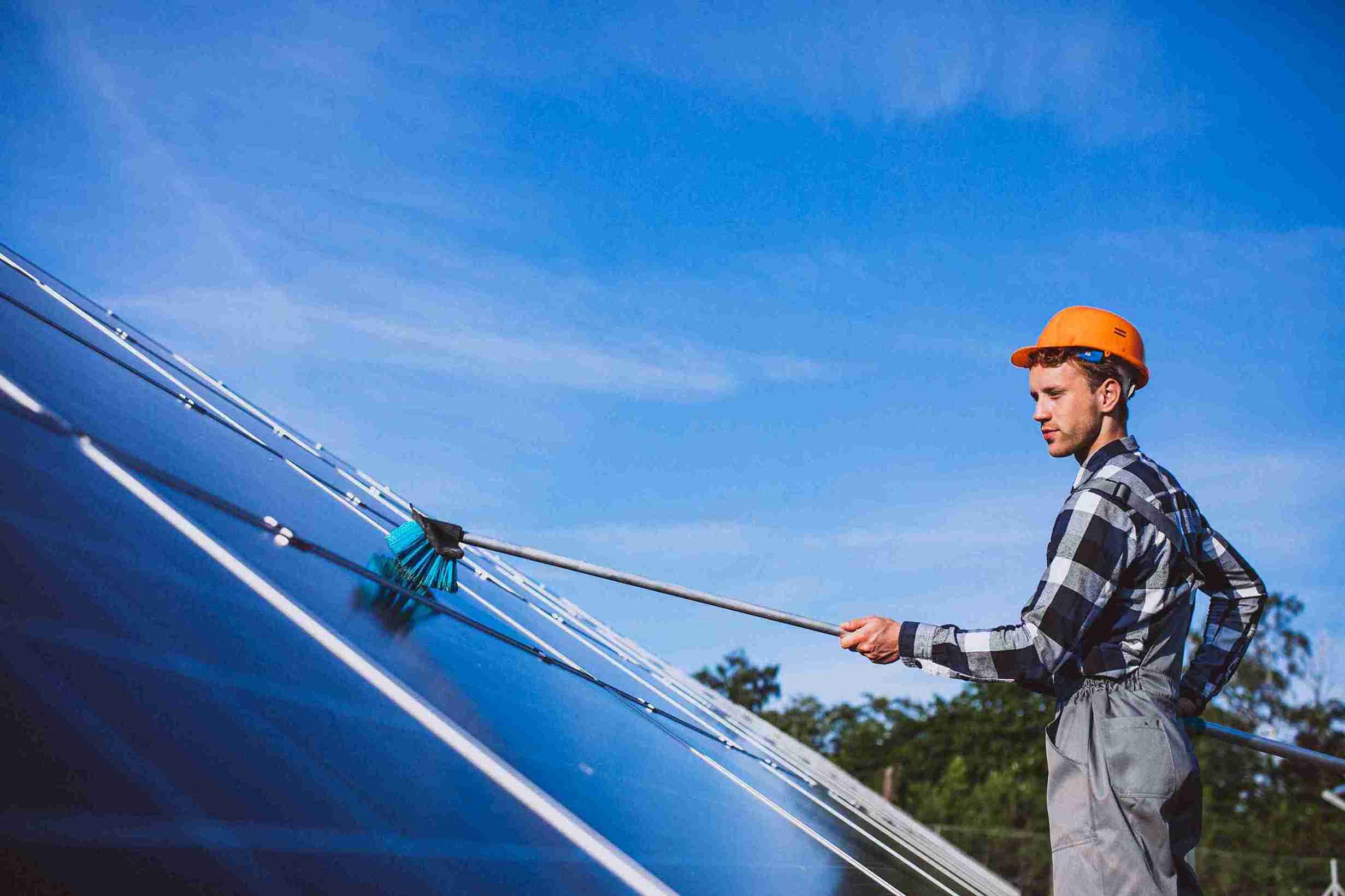
Solar Panel Sprinkler Cleaning for Green City Homes
Green City homeowners with rooftop solar do not need another roof chore; they need a controlled way to remove dust between manual washes. Solar panel sprinkler cleaning uses a measured rinse across each panel row, clearing loose debris without someone dragging a hose across the roof every few days.
That matters in Lahore. Dry spells, construction dust, pollen, and bird residue settle unevenly, often around lower panel edges. A sprinkler setup is not a magic “set it and forget it” gadget, but a sensible design can make routine cleaning safer, more consistent, and less wasteful than random hose washing.
What Is a Water Sprinkler System for Solar Panel Cleaning?
A water sprinkler system for solar panel cleaning is a fixed set of pipes, valves, and spray nozzles installed beside or above a solar array. It releases a controlled amount of water on a schedule so loose dust is rinsed away before it becomes a stubborn layer.
It should not behave like a lawn sprinkler. Garden sprinklers overspray walls and walkways, while solar-specific layouts use narrow coverage and nozzle positions matched to panel tilt. The aim is an even water sheet travelling down the glass, not a rooftop fountain show.
For a 10-panel home array, two zones of five panels can keep pressure steadier and make a blocked nozzle easier to identify. A fixed rinse works well on dry dust, light pollen, and fresh bird residue. It does not replace a careful manual clean where cement dust, oily grime, leaves, or old mineral marks have already bonded to the surface.
How Does the System Clean Panels Without Damage?
The system cleans by wetting the glass evenly and letting gravity carry loosened dust down the panel face. It should run gently enough to avoid forceful jets, yet cover the full width so no dry stripes remain.
A basic cycle has four steps: a controller opens one valve, water reaches that zone, nozzles rinse for a short programmed period, then the valve closes. The mechanism is simple. Layout quality decides whether the rinse is genuinely useful.
Nozzles usually sit along the upper edge or side rail, depending on roof geometry. Upper-edge placement often lets water travel naturally over a tilted panel. Flat or nearly flat roofs need extra care because water can collect at the lower frame and dry slowly. In Green City, where roofs range from compact homes to larger double-storey properties, drainage and nozzle angle matter more than expensive automation.
Is It Suitable for Green City Homes?
Solar panel sprinkler cleaning suits Green City homes with reliable water access, usable drainage, and enough service space around the array for spray lines. It is most useful where repeated manual washing has become inconsistent or inconvenient.
Start with roof access. An open row of panels is straightforward; an array trapped between tanks, parapet walls, satellite dishes, and cable runs may make pipe routing awkward. Do not force a system onto a cluttered roof. In some cases, manual cleaning remains the cleaner answer.
Dust patterns matter too. Homes near construction, unpaved approaches, or busy roads may see faster buildup than quieter inner streets. A short timed rinse can help during Lahore’s dry months before monsoon rain changes the roof routine. Adjust it from visible buildup, not because the timer has a personality problem.
Homeowners comparing solar panel cleaning services Green city with a sprinkler installation should not treat them as substitutes. A fixed system handles light, regular rinsing. Hands-on cleaning covers stuck-on grime, frame edges, wiring checks, and nozzles that need adjustment.
What Should a Reliable Setup Include?
A reliable setup needs controlled water delivery, weather-resistant fittings, and a way to isolate faults. The essentials are simple, but skipping them creates leaks, weak coverage, or endless tinkering.
A practical system includes:
- A dedicated water line and shut-off valve
- A sediment filter before the spray line
- Outdoor-rated pipe and secure clips
- Zone valves for larger arrays
- Low-angle nozzles
- A timer with manual override
- A flush point at the lowest end of the pipework
Keep the controller and filter accessible. A component hidden in a roof corner will not be inspected or cleaned. Also run every zone after installation and check the first, middle, and final panel in the row. That five-minute test catches most coverage problems early.
A solar cleaning company may suggest different nozzle styles after inspecting panel tilt, water pressure, and roof spacing. That is not needless fuss: the distance from the tank, the highest point of the pipe run, and the number of nozzles in one zone all affect real spray coverage. AfinitySolar treats this physical inspection as basic system hygiene, not an optional extra.
Why Do Water Quality and Drainage Matter?
Water quality can make or break the result. Dirty water clogs nozzles, while mineral-heavy water can leave pale spots after repeated drying. The panels may look clean immediately, then gradually lose clarity because the rinse itself is leaving residue.
Before committing to permanent piping, try a rinse on one panel and let it dry. Visible spotting signals that a simple sediment filter may not be enough; better treatment, a different source, or shorter cycles may be required. This is boring work, but it prevents automating the wrong water.
Drainage matters just as much. Water should move away from cable routes, junction boxes, and roof low points. Keep spray lines clear of electrical connections and do not direct nozzles toward inverter equipment, wall-mounted isolators, or open cable glands.
Solar panel sprinkler cleaning can reduce manual washing, but it cannot repair bad water quality or poor drainage. Fix those two issues before adding timers and automation.
How Often Should the System Run?
Most homes do not need daily wash cycles. The right frequency depends on dust buildup, rainfall, water quality, and the condition of the glass. Start conservatively, inspect results for two or three weeks, then adjust from evidence.
For many Lahore roofs, a short rinse once or twice weekly during dry, dusty periods is a reasonable starting point. After rain, inspect before running another cycle; rain may remove loose dust but leave mud specks behind. During cleaner weeks, leave the system off. Water is not free just because the timer is eager.
Run the system early morning or near sunset rather than in the afternoon heat. Cooler glass reduces rapid evaporation and makes leaks or uneven spray easier to spot. An automatic solar panel cleaning system should also have manual control for roof work, water shortages, repairs, and unusual weather.
What Maintenance Does a Sprinkler System Need?
Routine maintenance is simple but non-negotiable. Check the filter, inspect nozzle flow, and look for leaks monthly during active use. A partly blocked nozzle can look normal from ground level while one panel stays dusty.
Every few months, flush the line and compare the spray pattern across the row. If one area dries faster or remains dirty, find the coverage problem rather than simply increasing run time. Longer watering is the lazy fix, and it usually wastes water.
Searches for solar panel cleaning near me often start after output drops or panels look dull. Do not blame dirt automatically. Also check new shade, fault alerts, loose cables, or physical damage. Cleaning improves light access; it does not cure every performance problem.
Manual cleaning still has a role for stubborn grime, clamp checks, and a close look at lower panel edges. The strongest routine is mixed: light automated rinsing for consistency, plus periodic hands-on inspection when the array needs it.
Final Thoughts
A sprinkler setup can work well for Green City solar owners if it matches the roof, panel tilt, water quality, and drainage path. The useful version uses short controlled cycles, reaches every panel evenly, and keeps electrical areas dry.
Treat solar panel sprinkler cleaning as a maintenance tool, not a replacement for attention. Check coverage, use clean water where possible, and set the schedule around the dust you can actually see. Otherwise, it becomes one more rooftop gadget nobody trusts.
Frequently Asked Questions
Will a sprinkler system remove bird droppings?
It can soften and rinse away fresh, light residue. Dried or thick droppings may stay attached and need a careful manual clean with soft, non-abrasive tools. Avoid hard brushes and pressure jets.
Does a sprinkler system waste a lot of water?
It can waste water if it leaks, runs too long, or sprays too many panels at once. Zoned lines and short cycles use less water than uncontrolled hose washing because they target the panel surface only.
Can pipe be fixed directly onto solar panels?
Avoid attaching pipe to the glass or drilling into panel frames. Use appropriate roof or array-support mounting points and keep lines from shading the active panel surface. Poor placement can reduce output and complicate repairs.
Should bore water be used for rinsing?
Bore water may work, but test it first for mineral spotting. If it leaves residue after drying, use suitable filtration or a cleaner source. Repeated mineral deposits defeat the purpose of regular rinsing.
Can the system run during a power outage?
A gravity-fed setup may work if its valves and timer do not rely on mains power. Systems with pumps, solenoid valves, or smart controllers usually need electricity or battery backup. Include a manual shut-off either way.